
NDIS Payments and Invoicing Ultimate Guide
This ultimate guide will help simplify the NDIS payments and invoicing process.
We will explore everything about NDIS payments, such as requirements, reasons behind rejected NDIS payments, effective strategies for dispute resolution and reconciliation, etc. Also, you can find helpful insights and resources, such as NDIS invoice examples and templates.
What needs to be included on an NDIS invoice?
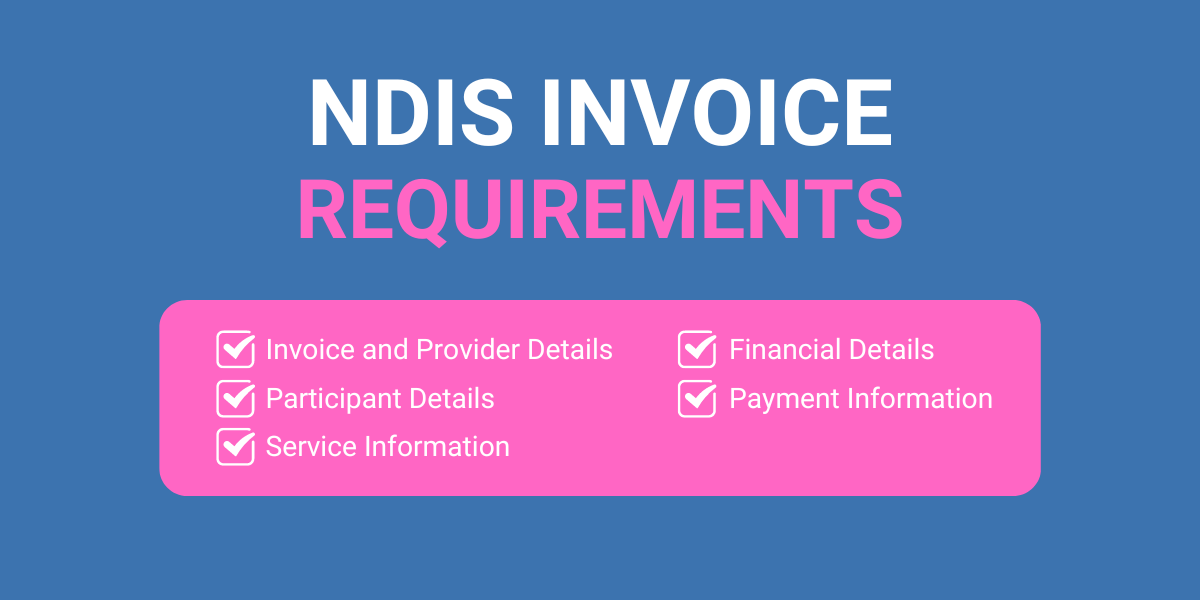
A compliant invoice will help your organisation get paid promptly and reduce the risk of rejection. To get paid correctly and on time, your NDIS invoice should include:
- Invoice and provider details
- Participant details
- Service information
- Financial details
- Payment information
1. Invoice and Provider Details
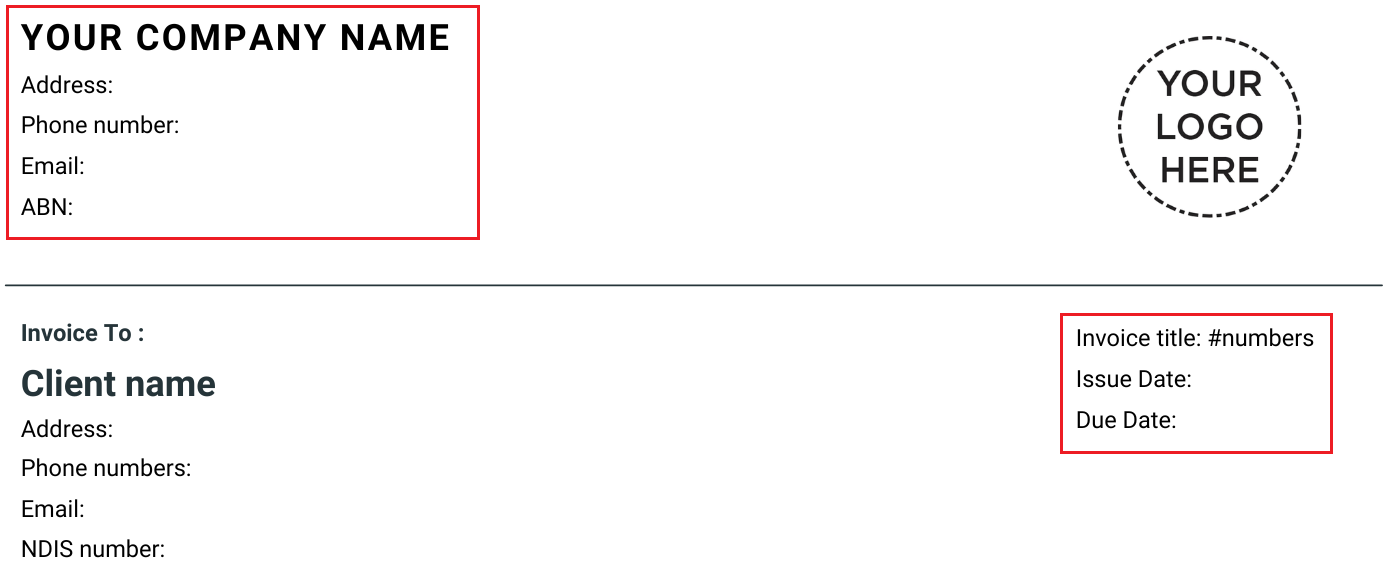
Your invoice must include the invoice numbers, the full legal name of your organisation, and contact details such as your address and telephone number. This ensures that the NDIA and the participant can contact you if necessary.
Your ABN (Australian Business Number) should be clearly stated in the invoices. This is essential for tax purposes and your identification as a registered NDIS provider.
Each invoice must also have a unique invoice number and the date it was issued, for payments and invoicing tracking purposes.
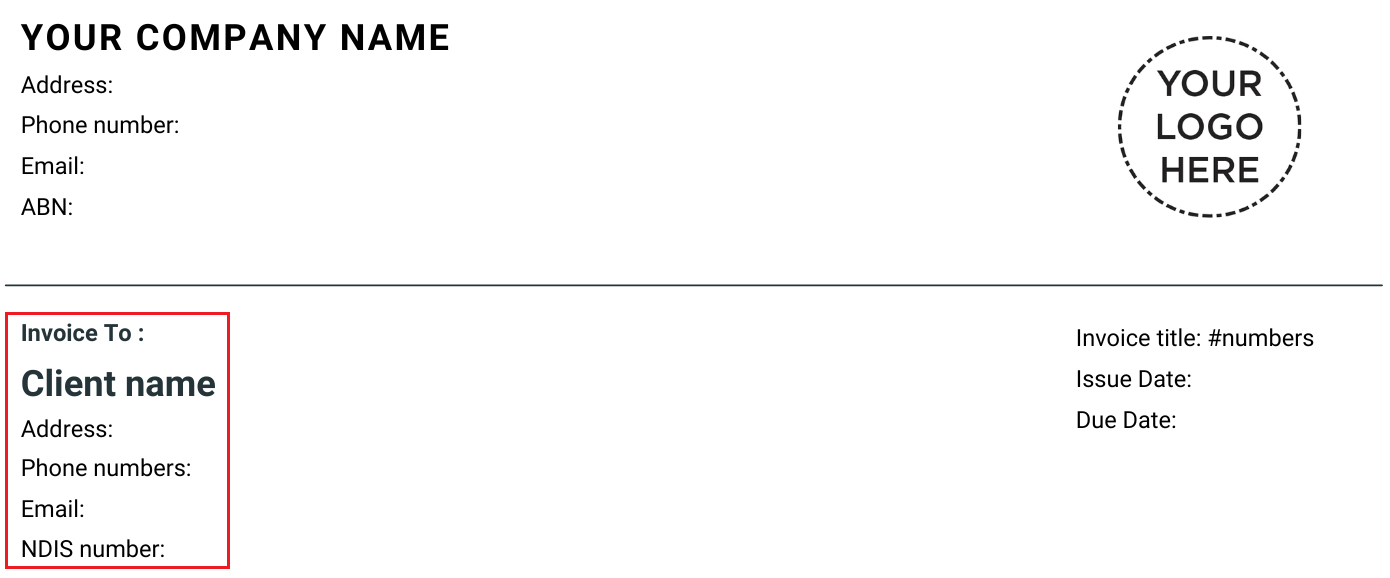
2. Participant Details
The participant's details are crucial on the NDIS invoices. This includes the full name of the NDIS participant receiving the service and their unique NDIS number (not mandatory). These details help track and correctly allocate funds to the participant's plan.
3. Service Information
The NDIS invoices should provide a detailed description of the services provided. This description should include:
- The NDIS support item reference number.
- The type of service.
- The dates or range of dates when the services were delivered.
- Quantity of NDIS support items.
- Cost per unit of support item
The description and the cost should match the service agreement with the participant and comply with the NDIS Price Guide. The accurate service date is also important for the NDIA to verify whether services were delivered within the participant's plan period.
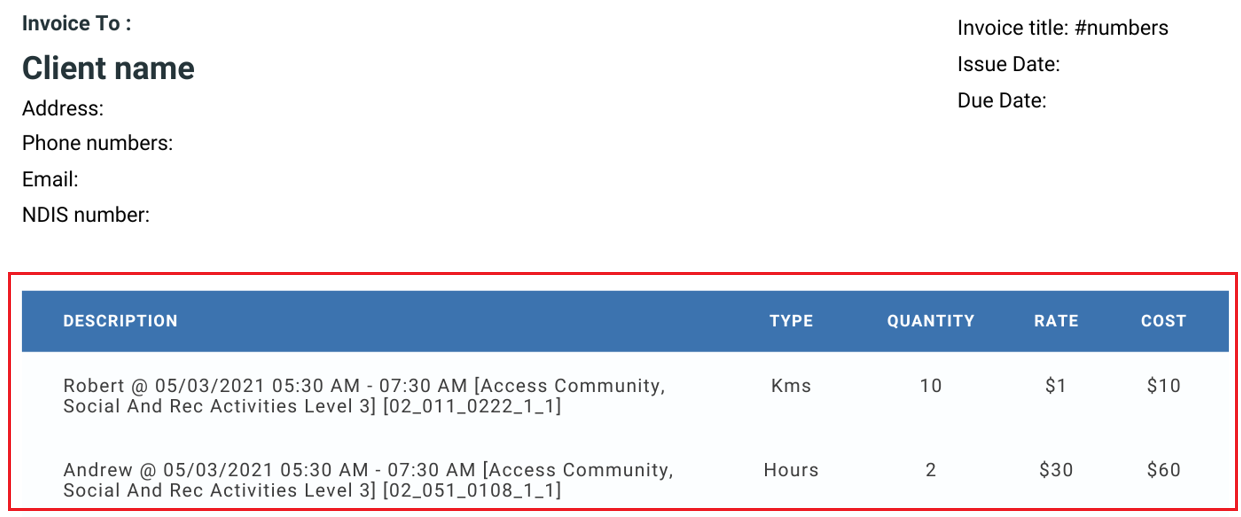
Furthermore, it's recommended to incorporate an additional table detailing the services provided, organised by line items. This is crucial as plan managers are required to claim through the portal using NDIS support items. Below is how the section “Supports Grouped by Line Item” looks on an invoice generated in Comm.care.
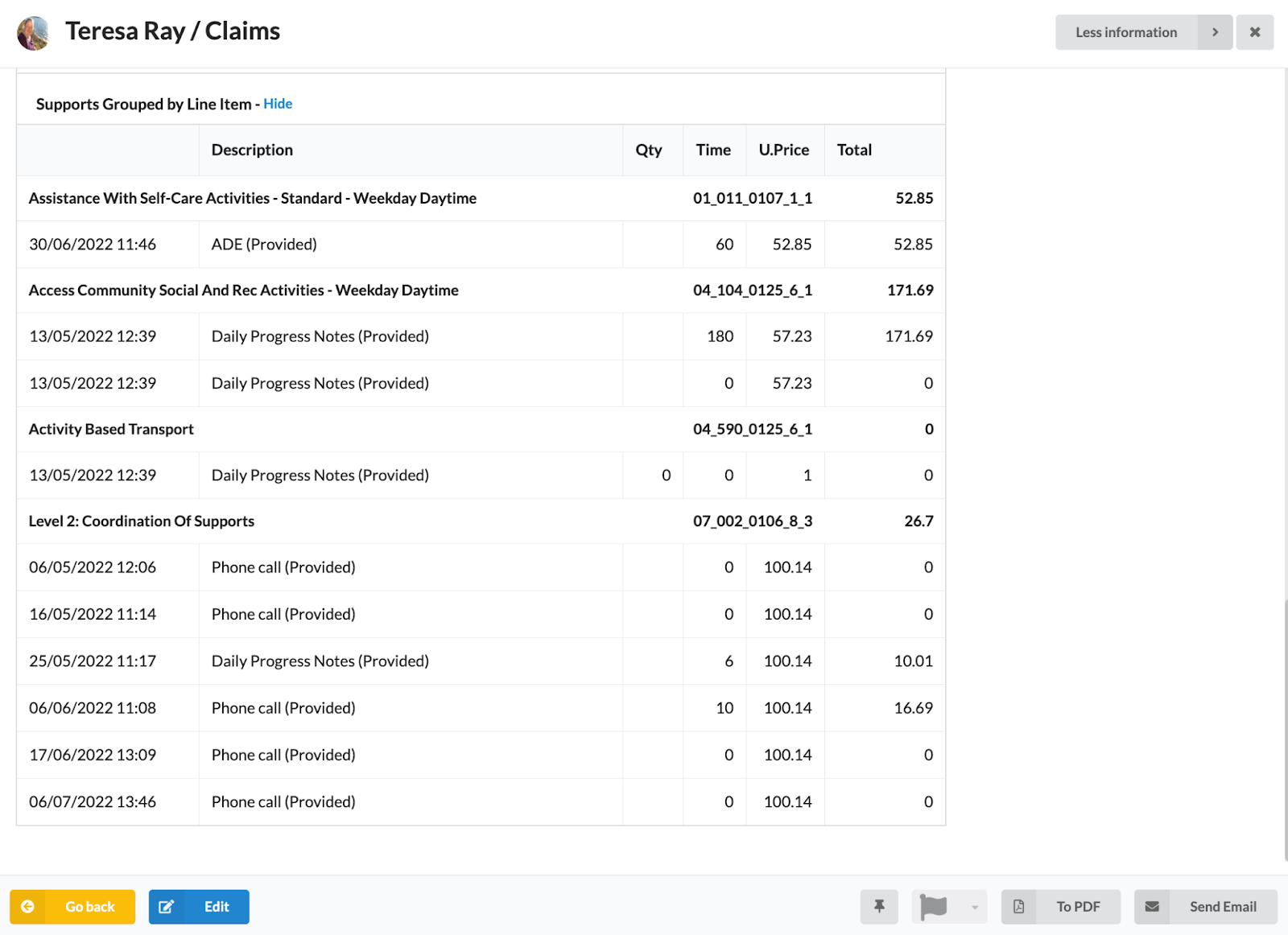
With Comm.care, you have the capability to generate an invoice/statement featuring services grouped by both progress notes and line items. This significantly expedites your claiming process within the portal.
4. Financial Details
The NDIS invoices should list the total amount being charged for the services, including the GST amount if applicable (most services are GST-free). If your services are GST-free, you can put $0 or N/A in the tax column.
5. Payment Information
Finally, for NDIS payment processing, the NDIS invoices should include the provider's bank account details for direct payments. This information is unnecessary if your NDIS payments are processed through the NDIS Myplace portal.
Besides, at the end of the invoice, you should also include the total amount due. If items on your invoice are taxed with GST, you need to list both the amount before tax and the total amount with the tax included.
NDIS invoice templates
To help service providers simplify the invoicing process, we offer an NDIS invoice template that you can use for free. This template includes all necessary details, ensuring compliance with NDIS guidelines.
We provide the NDIS invoice template in Google Sheet format. You can edit the invoice and download/export it (with portrait orientation) as a PDF to send to your clients. Download NDIS invoice template now.
Who Should You Send NDIS Invoices to?
Who you send your NDIS invoice to depends on how the participant manages their plan. There are three different options:
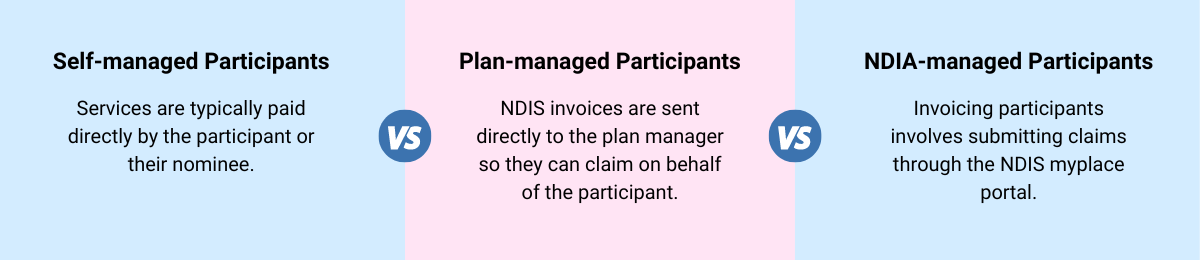
- Self-managed: Send the invoice directly to the participant or their nominee.
- Plan-managed: Send the invoice to the participant’s plan manager.
- NDIA-managed: Submit the invoice as a claim through the NDIS myplace portal.
Each funding type has its own process, so let’s break them down below.
Self-managed Participants
Self-managed participants are responsible for managing their NDIS funds directly. This includes selecting providers (including non-NDIS registered providers), negotiating pricing within NDIS guidelines, and making payments to service providers.
For service providers, working with self-managed participants means services are typically paid directly by the participant or their nominee. Providers need to ensure their invoices (or receipts) contain all necessary details. This will help the participants submit accurate NDIS payment requests to the NDIA for reimbursement.
Plan-managed Participants
Plan-managed participants have a plan manager who manages their NDIS funds. Plan managers are also responsible for paying providers, keeping financial records, and helping participants manage their budgets.
This means service providers will send NDIS invoices directly to the plan manager so they can claim on behalf of the participant. Overall, the plan managers handle all the financial administration and are familiar with NDIS invoicing requirements.
NDIA-managed Participants
When participants are NDIA-managed, their funds are directly managed by the National Disability Insurance Agency. This option requires participants to use NDIS-registered providers for all their services and support.
As a service provider, invoicing for NDIA-managed participants involves submitting claims through the NDIS myplace portal. This secure platform helps providers manage their services, participants, and NDIS payments.
Through NDIS myplace portal, the NDIA directly pays providers upon the approval of claims, complying with the latest price guide and service agreements.
Frequently Asked Questions
How does NDIS payments work?
NDIS payments depend on how a participant manages their funding—self-managed, plan-managed, or NDIA-managed. For self-managed participants, they either pay the provider directly or request funds from the NDIA before making payment. For plan-managed participants, the plan manager handles the payment on behalf of the participant. NDIA-managed participants have their providers submit claims directly through the NDIS myplace portal, and payments are made by the NDIA.
How do you invoice NDIS?
To invoice NDIS, include key details such as your ABN, contact details, participant name, support item codes, service dates, quantities, and unit costs. For self-managed participants, send the invoice to the participant or their nominee. For plan-managed participants, send it directly to the plan manager, and for NDIA-managed participants, submit claims via the NDIS myplace provider portal. Ensure all details match the NDIS Price Guide and the participant’s service agreement to avoid rejections.
How long does it take for NDIS to pay invoices?
NDIS payment timeframes vary. Self-managed participants pay based on their own timeline or after receiving NDIA reimbursement, which usually takes 24–48 hours. Plan managers typically process invoices and claim from NDIA within 5–7 business days, then pay providers. For NDIA-managed participants, the NDIA generally processes payments within 2–5 business days after the claim is submitted through the myplace portal.